Kitchen and Bathroom Plumbing Phoenix - Expert Service for Your Most Important Rooms
Professional plumbing for kitchen and bathroom remodels, repairs, and upgrades throughout Phoenix.
Call 602-834-1208
The Two Rooms That Can't Function Without Good Plumbing
Your kitchen and bathrooms are the most plumbing-intensive rooms in your Phoenix home. A non-functioning kitchen sink brings cooking and cleaning to a halt. A clogged toilet or broken shower makes the bathroom unusable. These rooms demand reliable plumbing because when they don't work, your entire household routine gets disrupted.
Phoenix Plumbing Co. specializes in kitchen and bathroom plumbing throughout Phoenix and the Valley. Whether you're remodeling these rooms, dealing with fixture problems, upgrading old plumbing, or addressing leaks and clogs specific to kitchens and bathrooms, we provide expert plumbing service that keeps these essential spaces functional.
We've been working on Phoenix kitchen and bathroom plumbing since 2012. These rooms have unique plumbing challenges that differ from other areas of your home. Kitchens face grease buildup, garbage disposal issues, and the demand for hot water at multiple fixtures simultaneously. Bathrooms deal with hair clogs, hard water mineral buildup on fixtures, toilet problems, and shower valve issues. We understand the specific plumbing needs of both rooms.
Most kitchen and bathroom plumbing repairs take 1-3 hours depending on the issue. Simple fixture replacements complete quickly. Complex problems like shower valve replacement or extensive
drain cleaning take longer. Remodel plumbing happens in phases coordinated with your overall renovation timeline—rough-in work before surfaces close up, finish work after tile, counters, and paint are complete.
Schedule A Service Call
Contact Us
Kitchen Plumbing Services and Common Issues
Kitchen Sink and Faucet Problems
Kitchen sinks take tremendous abuse daily. Washing dishes, rinsing produce, cleaning cooking equipment—your kitchen sink handles it all. Common kitchen sink problems include slow draining from grease and food buildup, leaking drain connections under the sink, cracked or stained sink basins needing replacement, and improper garbage disposal connections causing backups.
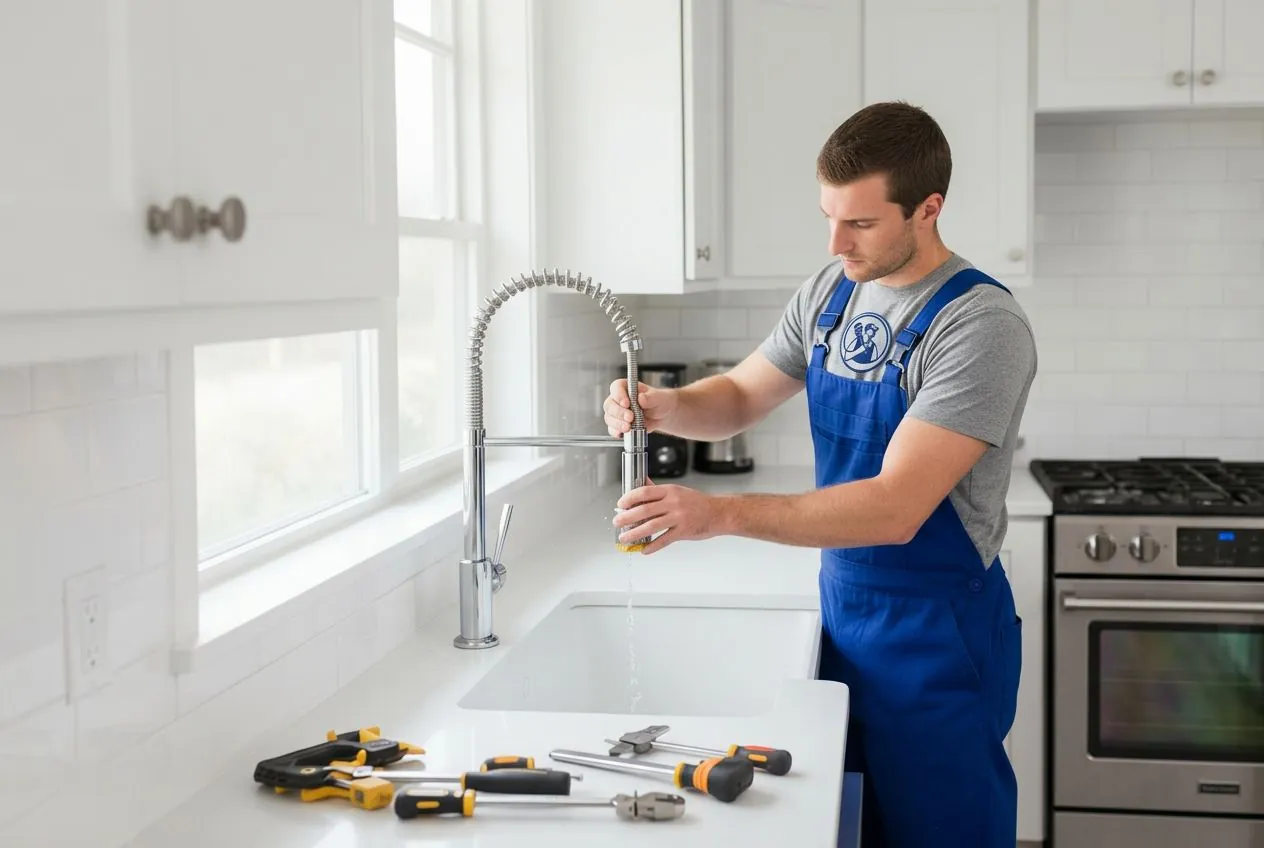
Kitchen faucets fail more frequently than other household faucets because they're used constantly. Phoenix's hard water accelerates faucet deterioration—mineral deposits clog aerators, corrode internal components, and damage ceramic disc cartridges. Signs your kitchen faucet needs repair or replacement include reduced water flow indicating mineral buildup, dripping when turned off, difficulty turning handles, and leaks around the base.
We repair and replace kitchen faucets of all types including single-handle pull-down faucets, two-handle traditional faucets, commercial-style restaurant faucets with sprayers, and touchless motion-activated faucets. Modern kitchen faucets have multiple functions—we ensure all spray patterns work, pull-down wands extend and retract smoothly, and temperature control operates properly.
Undermount kitchen sinks require proper support and sealing. We've seen undermount sinks installed incorrectly that eventually pull away from countertops due to inadequate support. Proper installation uses clips, adhesive, and in some cases additional bracing to support the sink's weight when full of water and dishes.
Garbage Disposal Installation and Repair
Garbage disposals are kitchen workhorses that eventually wear out. Signs your disposal needs replacement include frequent jams and resets, persistent bad odors even after cleaning, loud grinding noises indicating damaged grinding components, and leaks from the disposal body or connections.
We install garbage disposals sized appropriately for your household. Small households might be fine with 1/3 horsepower disposals. Large families or serious cooks need 3/4 to 1 horsepower units that handle higher volume. Proper disposal installation includes secure mounting preventing vibration, correct drain line connections with proper slope, dishwasher drain connection if applicable, and electrical wiring meeting code requirements.
Common disposal problems we fix include jammed impellers from silverware or hard objects, worn mounting gaskets causing leaks, failed motor bearings creating noise, and clogged discharge pipes backing up the disposal. Many disposal problems can be repaired rather than requiring full replacement.
The relationship between your disposal and drain system matters. Disposals push ground food down drains that weren't designed for solid waste. Over time, this contributes to kitchen drain clogs. We recommend running cold water during disposal operation and for 30 seconds after turning it off to flush debris completely through the drain system.
Dishwasher Installation and Connections
Dishwashers require three connections—water supply, drain line, and electrical power. Each connection point can develop problems. Water supply line leaks damage cabinets and flooring. Improper drain connections cause backups into the dishwasher or sink. Failed electrical connections prevent dishwasher operation.
We install dishwasher water supply lines with shutoff valves under the sink for easy maintenance access. This lets you turn off water to the dishwasher without shutting off the entire house. Supply lines should be braided stainless steel or copper—not the plastic lines that crack and leak.
Dishwasher drain lines must include high loops or air gaps preventing backflow contamination. Phoenix code requires one or the other. High loops are simpler—the drain line loops up as high as possible under the counter before connecting to the disposal or drain. Air gaps mount on the countertop providing visible backflow prevention.
When dishwashers don't drain properly, the problem is usually improper drain line installation, kinked drain hoses, clogged disposal connections, or failed dishwasher pumps. We diagnose drainage issues and make appropriate repairs.
Kitchen Plumbing for Remodels
Kitchen remodels often involve relocating plumbing fixtures, adding features, or upgrading to larger sinks. This requires running new supply and drain lines to new locations. Kitchen remodel plumbing starts with rough-in work before cabinets and countertops install.
During kitchen remodel rough-in, we install water supply lines (hot and cold) to all sink locations, drain lines sized for sinks and disposals with proper slope, dishwasher supply and drain connections, ice maker supply lines if you have a refrigerator with ice maker, and pot filler supply lines if your design includes this feature.
Pot fillers are convenient water sources over ranges for filling large pots. They require running a cold water line up the wall behind the range and installing a wall-mounted pot filler faucet. The faucet needs proper support in the wall and correct height above the range.
After cabinets and countertops are installed, we return for finish plumbing. This includes installing sinks in their final positions with proper sealing, connecting faucets and testing all functions, installing and connecting garbage disposals, hooking up dishwashers with all required connections, and connecting refrigerator ice maker lines.
We coordinate with your cabinet installer and countertop fabricator to ensure sink cutouts are correct sizes and plumbing connections align properly with cabinet layouts.
Bathroom Plumbing Services and Common Issues
Toilet Installation, Repair, and Replacement
Toilet installations are the most essential bathroom fixture and develop various problems over their lifespan. Common toilet issues include running continuously wasting hundreds of gallons daily, weak flushing from clogged jets or siphon jets, rocking on the floor indicating failed wax ring seal, leaking around the base from wax ring failure, and frequent clogging from internal obstructions or vent problems.
Many toilet problems can be repaired without full replacement. We replace flappers that don't seal properly, fill valves that run continuously or don't fill tanks, flush valves and handles that don't operate smoothly, and wax ring seals that leak. These repairs cost $150-300 and extend toilet life significantly.
Toilet replacement becomes necessary when the porcelain cracks, internal passages are too clogged with mineral deposits to flush properly, or the toilet is simply old and inefficient. Toilets manufactured before 1994 use 3.5-7 gallons per flush compared to modern 1.28-1.6 gallon efficient toilets. Upgrading saves substantial water.
We install all toilet types including standard two-piece toilets, one-piece toilets with integrated tanks, comfort-height toilets (ADA compliant), dual-flush toilets offering full and partial flush options, and wall-hung toilets for modern bathroom designs.
Proper toilet installation is critical. The toilet must be level so it doesn't rock. The wax ring must seal completely preventing leaks and sewer gas entry. Closet bolts must be tight enough to secure the toilet but not so tight they crack the porcelain base.
Bathroom Sink and Vanity Plumbing
Bathroom sinks come in more varieties than kitchen sinks—drop-in sinks, undermount sinks, vessel sinks sitting on countertops, pedestal sinks, and wall-mounted sinks. Each type has specific installation requirements.
Bathroom sink problems include slow draining from hair and soap scum buildup, pop-up drain assemblies that don't seal or operate properly, leaking P-traps under the sink, corroded drain pipes especially in older homes, and faucet failures from hard water damage.
Pop-up drain assemblies in bathroom sinks cause ongoing problems. The mechanism that opens and closes the drain stopper accumulates hair and soap scum. We clean or replace pop-up assemblies that don't function smoothly. Modern pop-up drains have better designs than older versions—replacement often works better than repair.
Bathroom faucet repair and replacement addresses dripping, reduced water flow, handle operation problems, and leaks around the base. Bathroom faucets face similar hard water challenges as kitchen faucets but typically last longer because they're used less frequently.
We install bathroom faucets in all configurations including single-hole single-handle faucets, centerset faucets with combined spout and handles, widespread faucets with separate spout and handles, and wall-mounted faucets for vessel sinks or wall-mounted basins.
Bathtub and Shower Plumbing
Bathtub and shower plumbing is more complex than sink plumbing because it involves multiple components working together. The system includes mixing valves controlling temperature, diverter valves directing water to tub spout or showerhead, pressure-balancing or thermostatic valves preventing temperature spikes, tub spouts and showerheads, and drain assemblies with overflow connections.
Common tub and shower problems include temperature fluctuations when other fixtures run, low water pressure at the showerhead, tub spouts that don't divert water to the shower, dripping showerheads or tub spouts, and slow draining tubs from hair and soap buildup.
Shower valve replacement is one of the more involved bathroom plumbing repairs. The valve sits inside the wall controlling water flow and temperature. Accessing it requires opening the wall. We cut access holes precisely sized for the repair and patch them afterward. For shower valves failing in tiled showers, we sometimes access from the back side through a bedroom closet to avoid disturbing tile.
Phoenix's hard water clogs showerheads with mineral deposits. White crusty buildup around showerhead holes reduces water flow and creates uneven spray patterns. We replace showerheads clogged beyond cleaning and recommend regular cleaning with vinegar to prevent mineral buildup.
Walk-in showers and custom shower installations require careful planning. Multiple showerheads, body sprays, and rain heads all need adequate water pressure and volume. We calculate water demand and verify your supply lines can handle the load before installation. Undersized supply lines cause pressure drops when multiple shower functions run simultaneously.
Bathroom Plumbing for Remodels
Bathroom remodel plumbing often involves more extensive work than kitchen remodels because bathrooms typically have more fixtures in less space. Moving a toilet requires relocating the drain line—a major undertaking. Adding a second sink to a vanity requires running additional supply and drain lines.
Bathroom remodel rough-in includes installing all drain lines with proper slope and venting, running hot and cold supply lines to each fixture location, installing blocking and backing for wall-mounted fixtures, setting shower valves at correct heights, installing tub drains and testing them before waterproofing, and roughing in toilet drains (closet flanges) at proper heights for finished floor levels.
Shower and tub installations require coordination with tile setters. The valve goes in during rough-in, but the trim and handles install after tile is complete. We provide proper measurements so tile setters know exactly where to cut tile for valve access.
Bathroom remodels often include fixture upgrades. We help homeowners choose fixtures appropriate for their bathroom size, usage patterns, and budget. A master bathroom with two users needs different fixtures than a guest bathroom used occasionally.
Hard Water Effects on Kitchen and Bathroom Fixtures
How Phoenix Hard Water Damages Fixtures
Phoenix water contains 200-300 parts per million of dissolved minerals making it very hard water. These minerals wreak havoc on kitchen and bathroom fixtures in ways homeowners in soft water areas never experience.
Hard water deposits leave white crusty buildup around faucet aerators, showerheads, and anywhere water evaporates. This isn't just unsightly—it reduces water flow by clogging small openings. Faucet aerators clog completely preventing normal flow. Showerheads develop uneven spray patterns as holes clog with minerals.
Inside fixtures, hard water damages components faster than soft water. Ceramic disc cartridges in faucets wear out prematurely from abrasive mineral particles. Rubber seals and O-rings degrade faster when exposed to mineral-laden water. Metal components corrode more quickly.
We see the effects daily. A faucet that might last 15 years in a soft water area fails in 8-10 years in Phoenix. Showerheads that should last indefinitely need replacement every 5-7 years due to mineral buildup. Toilet fill valves clog with minerals and fail to operate properly.
Preventing and Managing Hard Water Damage
Water softener installation provides the best protection against hard water damage to kitchen and bathroom fixtures. Softeners remove calcium and magnesium before water reaches fixtures, dramatically reducing mineral buildup and extending fixture life.
Homes with water softeners have visibly different fixtures than homes without. Faucets stay cleaner, showerheads maintain proper flow, and glass shower doors don't develop the heavy soap scum and mineral film that's impossible to remove in unsoftened water.
Without a whole-home water softener, regular maintenance helps manage hard water effects. We recommend cleaning faucet aerators monthly by unscrewing them and soaking in vinegar to dissolve minerals. Showerheads benefit from quarterly vinegar soaks. Cleaning prevents buildup from becoming so severe that permanent damage occurs.
For severely damaged fixtures, replacement makes more sense than cleaning. A showerhead with heavy mineral deposits in every hole won't perform properly even after cleaning because the minerals have etched the surface. Fresh fixtures work better and look better.
Fixture Selection for Hard Water Areas
Some fixtures resist hard water damage better than others. When replacing kitchen and bathroom fixtures in Phoenix, we recommend features that handle hard water well.
Faucets with ceramic disc cartridges outlast compression-style faucets with rubber washers. The ceramic discs are harder and resist mineral abrasion better. Quality faucets from reputable manufacturers use better internal components that last longer in hard water.
Showerheads with rubber nozzles allow manual cleaning by rubbing fingers across the nozzles to dislodge mineral buildup. This simple feature extends showerhead life significantly. Fixed plastic nozzles can't be cleaned this way and clog permanently.
Chrome and brushed nickel finishes show less mineral buildup than oil-rubbed bronze or matte black finishes. The smoother surfaces resist mineral adhesion better. This doesn't mean avoiding dark finishes—just understand they require more frequent cleaning in Phoenix.
Kitchen and Bathroom Drain Problems
Kitchen Drain Clogs and Solutions
Kitchen drains clog differently than bathroom drains. Kitchen clogs come from grease, food particles, soap scum, and garbage disposal debris combining into stubborn blockages. The grease component makes kitchen clogs particularly difficult—grease coats pipe walls and traps everything else flowing through.
The most common kitchen clog location is the P-trap directly under the sink. This U-shaped pipe catches a lot of debris before it reaches main drain lines. We remove and clean P-traps which often solves kitchen drain problems immediately. Years of accumulated grease and debris come out in chunks.
Deeper kitchen drain clogs require cable snaking or hydro-jetting. Standard chemical drain cleaners don't work well on grease clogs—the chemicals might melt a small hole through the grease but don't remove the coating on pipe walls. Professional drain cleaning equipment actually removes the buildup.
Dishwasher drain line clogs cause water to back up into the dishwasher. Sometimes the clog is in the dishwasher drain hose itself. Other times it's in the disposal or drain line where the dishwasher connects. We locate the blockage and clear it so dishwashers drain properly.
Preventing kitchen drain clogs requires better habits. Never pour grease down drains—pour it into containers and throw it away after it solidifies. Run hot water after using the sink to help flush grease through pipes before it cools and sticks. Use garbage disposals properly with cold water running during and after operation.
Bathroom Drain Clogs and Solutions
Bathroom drains clog from hair combined with soap scum and Phoenix's hard water minerals. Hair is the primary culprit—a single long hair catches on rough spots inside drain pipes, more hair catches on that hair, and eventually you have a dense mass blocking the drain.
Bathroom sink drains clog at the pop-up drain assembly. Hair wraps around the pop-up mechanism creating blockages. We remove pop-up assemblies and clean all the hair and gunk wrapped around them. This simple cleaning often restores proper drainage without needing to snake the drain line.
Shower and bathtub drains accumulate massive amounts of hair. If multiple people with long hair use the bathroom, you're probably dealing with regular hair clogs. The hair combines with soap, shampoo, conditioner, and minerals into a slimy mass that completely blocks drains.
We use drain snakes specifically designed for bathroom drains. These tools have barbed ends that grab hair masses and pull them out. For severe clogs deeper in the line, longer snakes or hydro-jetting may be necessary.
Hair catchers are inexpensive drain screens that prevent most hair from entering drains in the first place. A $5 hair catcher prevents $200 drain cleaning bills. We recommend them for all bathroom sinks, showers, and tubs.
Vent Issues Affecting Kitchen and Bathroom Drains
Slow draining fixtures don't always mean clogs—sometimes the problem is inadequate venting. Drain systems need air to flow properly. Vent pipes allow air into the drain system preventing vacuum conditions that slow drainage.
Symptoms of vent problems include slow drainage at multiple fixtures, gurgling sounds from drains, toilet bubbles when other fixtures drain, and sewer gas odors inside the house. These symptoms indicate air isn't entering the drain system properly.
Vent problems require different solutions than clogs. We inspect vent systems to ensure pipes aren't blocked, vents extend through the roof properly, and venting meets current code. Sometimes older homes have undersized vents that need upgrading. Other times vent pipes are blocked by bird nests, leaves, or other debris.
Adding fixtures during bathroom remodeling sometimes requires adding or extending vents. Every fixture needs adequate venting to drain properly. We ensure remodel plumbing includes proper venting meeting code requirements.
Kitchen & Bathroom Plumbing FAQs
Do you provide kitchen and bathroom plumbing in Phoenix AZ?
Yes. Phoenix Plumbing Co. offers professional
kitchen and bathroom plumbing services in Phoenix AZ for residential homes.
What kitchen plumbing services do you offer?
We repair and install sinks, faucets, garbage disposals, dishwashers, water lines, and drainage systems.
What bathroom plumbing services do you handle?
We provide toilet repair and installation, shower and tub plumbing, faucet installation, drain repairs, and leak detection.
Can you fix leaks under sinks or behind walls?
Yes. We locate and repair hidden leaks in kitchen and bathroom plumbing to prevent water damage and mold.
Do you install new fixtures during remodels?
Absolutely. We install new kitchen and bathroom fixtures during remodels or upgrades.
Are your plumbing repairs up to code?
All kitchen and bathroom plumbing repairs and installations meet Phoenix and Arizona plumbing code requirements.
How long do kitchen or bathroom plumbing repairs take?
Many repairs can be completed the same day, depending on the issue and access.
Can plumbing issues increase my water bill?
Yes. Leaks, running toilets, or faulty fixtures can significantly raise water bills if not repaired.
Do you work with contractors during remodels?
Yes. We coordinate with contractors and homeowners to keep kitchen and bathroom remodels on schedule.
Do you offer emergency kitchen or bathroom plumbing repair?
Yes. If a leak or backup is causing damage, our emergency plumbing team can respond quickly.
Water Pressure Issues in Kitchens and Bathrooms
Low Water Pressure Causes and Solutions
Low water pressure frustrates homeowners and makes kitchens and bathrooms less functional. Weak flow at kitchen faucets makes washing dishes take longer. Low shower pressure creates unsatisfying showers.
Common low pressure causes include mineral buildup in faucet aerators and showerheads restricting flow, corroded galvanized pipes reducing internal diameter, partially closed shutoff valves at fixtures or the water meter, pressure regulators set too low or failing, and leaking pipes reducing pressure throughout the house.
We diagnose low pressure problems systematically. First we test pressure at different fixtures to determine if the problem affects the whole house or specific fixtures. Low pressure at one fixture suggests a local problem like a clogged aerator. Low pressure throughout indicates a whole-house issue.
For clogged aerators and showerheads, cleaning or replacement solves the problem immediately. For corroded pipes, sections may need replacement with modern materials. For pressure regulator issues, adjustment or replacement restores proper pressure.
High Water Pressure Problems
High water pressure (over 80 PSI) damages fixtures and shortens their lifespan. Excessive pressure stresses connections causing leaks, wears out valve components faster, causes toilets to run constantly, and creates water hammer when fixtures close quickly.
Some Phoenix areas have consistently high water pressure. We recommend pressure regulator installation for homes with excessive pressure. Regulators reduce incoming pressure to safe levels (typically 50-60 PSI) protecting your entire plumbing system.
Signs you have high water pressure include frequent fixture failures, leaking connections, loud banging when fixtures turn off, and toilets that run briefly after flushing. Testing water pressure confirms if it's excessive.
Pressure Balancing in Showers
Temperature fluctuations when toilets flush or other fixtures run indicate missing or failed pressure-balancing valves. Modern building codes require pressure-balancing or thermostatic mixing valves in showers preventing sudden temperature spikes.
Older shower valves without pressure balancing allow temperature swings when water pressure changes. Someone flushes a toilet, cold water diverts to fill the toilet tank, and suddenly your shower goes scalding hot because less cold water reaches the shower valve.
We install pressure-balancing shower valves during bathroom remodels and as replacements for failed older valves. These valves automatically adjust the hot/cold mix maintaining consistent temperature despite pressure changes.
Schedule Kitchen or Bathroom Plumbing Service in Phoenix
Whether you're remodeling your kitchen or bathroom, dealing with fixture problems, or upgrading old plumbing, Phoenix Plumbing Co. provides expert plumbing service for Phoenix's most important rooms.
Call 602-834-1208 to schedule kitchen or bathroom plumbing service or request a remodel quote.
We serve Phoenix homeowners with professional kitchen and bathroom plumbing including fixture installation and repair, drain cleaning, remodel plumbing, and upgrades. Licensed, insured, and experienced with all aspects of kitchen and bathroom plumbing.
Phoenix Plumbing Co. has been serving Phoenix kitchens and bathrooms since 2012. We understand these rooms' unique plumbing needs and deliver reliable solutions.
Upgrading Kitchen and Bathroom Plumbing
When to Upgrade vs Repair
Kitchen and bathroom fixtures eventually reach a point where replacement makes more sense than ongoing repairs. A faucet that's been repaired three times in two years probably needs replacement. A toilet that clogs constantly despite repeated attempts to clear it needs upgrading to a better flushing model.
We help homeowners decide between repair and replacement based on the fixture's age, the repair cost compared to replacement cost, how many times the same fixture has needed repair, whether the fixture meets current efficiency standards, and whether the fixture fits the homeowner's current needs.
Upgrading makes sense when fixtures are outdated, inefficient, or no longer suit your needs. That builder-grade bathroom faucet that came with the house 15 years ago doesn't owe you anything. Replacing it with a quality faucet provides better performance and appearance.
Kitchen and bathroom upgrades don't require full remodels. We replace individual fixtures improving function and appearance without major renovation. New faucets, sinks, toilets, or showerheads update rooms significantly.
Eco-Friendly Fixture Upgrades
Modern fixtures use significantly less water than older models while maintaining performance. Upgrading to efficient fixtures reduces water bills and conserves water—important in Phoenix's desert environment.
Low-flow toilets use 1.28 gallons per flush compared to old toilets using 3.5-7 gallons. A family of four saves 15,000-20,000 gallons annually by upgrading toilets. That's $75-100 in water savings yearly. Over the toilet's lifespan, the water savings pay for the toilet several times over.
Low-flow showerheads reduce flow from 2.5 gallons per minute to 1.5-2.0 gallons per minute without sacrificing pressure. Modern low-flow showerheads use air injection and optimized spray patterns creating satisfying showers with less water.
Kitchen and bathroom faucets now include aerators limiting flow to 1.5 gallons per minute or less while maintaining useful pressure for washing hands and dishes. We install WaterSense certified fixtures meeting EPA efficiency standards.
Accessibility Upgrades
As homeowners age, kitchen and bathroom plumbing accessibility becomes important. We install fixtures supporting aging-in-place including lever-style faucet handles easier to operate than knobs, comfort-height toilets (ADA height) easier for standing and sitting, grab bars near toilets and in showers for safety, handheld shower wands easier to use than fixed showerheads, and walk-in tubs with doors for safer bathing.
These upgrades allow homeowners to stay in their homes longer rather than moving to assisted living due to accessibility issues. Most accessibility upgrades look modern and attractive—they don't scream "accessible bathroom."
Smart Plumbing Technology
Modern kitchen and bathroom fixtures include smart technology previously unavailable. Touchless kitchen faucets activate with hand motion—convenient when hands are messy from cooking. Voice-activated faucets respond to commands for hands-free operation.
Smart toilets include features like automatic lids that open when you approach, heated seats, bidet functions, and night lights. While expensive, smart toilets provide comfort and hygiene benefits many homeowners appreciate.
Digital shower controls allow precise temperature setting and save preferred settings for different users. You set your perfect shower temperature once, and the system maintains it exactly every time.
We install smart plumbing fixtures and ensure they integrate properly with your home's electrical and plumbing systems. Smart fixtures require power sources and may need additional wiring.


