Water Heater Repair and Installation Phoenix Homeowners Trust

Expert service for tank and tankless water heaters. Same-day repairs and installations available.

When Your Phoenix Water Heater Stops Working

No hot water changes everything about your daily routine. Morning showers become impossible. Dishes pile up because washing them in cold water doesn't get them clean. Laundry sits waiting because cold water alone won't handle the job. Your water heater is one of those appliances you don't think about until it stops working—then suddenly it's all you can think about.

Phoenix Plumbing Co. specializes in water heater repair and installation throughout Phoenix and the Valley. We work on all types and brands of water heaters including traditional tank models, tankless systems, gas and electric units, and heat pump water heaters. Whether your water heater completely failed or it's just not performing like it should, we diagnose the problem and provide honest recommendations about repair versus replacement.

We've been fixing and installing water heaters in Phoenix since 2012. Phoenix's hard water creates unique challenges for water heaters that plumbers in other parts of the country don't deal with. The minerals in our water accelerate sediment buildup, corrode components faster, and shorten overall lifespan. We understand these local conditions and know how to make water heaters last as long as possible in Phoenix's demanding environment.

Most water heater repairs can be completed the same day you call. Common fixes like replacing heating elements, thermostats, or pressure relief valves typically take 1-2 hours. Water heater installation usually takes 2-4 hours depending on the type of unit and whether we're replacing an existing water heater or installing one in a new location.

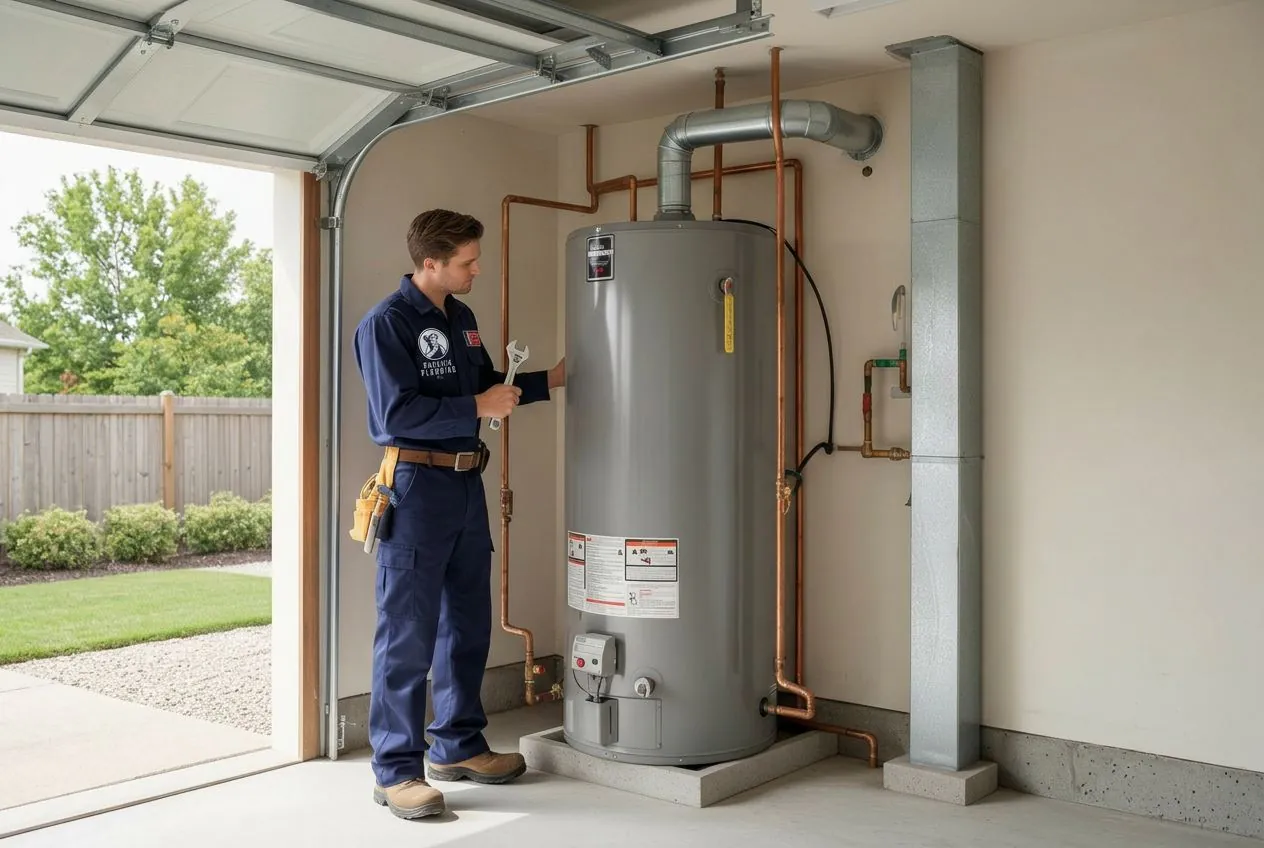
happy Phoenix homeowner with local plumber

Schedule A Service Call

Contact Us

Common Water Heater Problems in Phoenix Homes

No Hot Water at All

When you turn on the hot tap and only cold water comes out, something has failed in your water heater's heating system. For electric water heaters, this usually means one or both heating elements burned out, or the thermostat stopped working. For gas water heaters, the pilot light may have gone out, the gas valve could be faulty, or the burner assembly needs cleaning.

Most no-hot-water situations can be repaired unless the tank itself has failed. We test heating elements with a multimeter, check thermostats for proper function, inspect gas valves and pilot assemblies, and examine all electrical connections. If components have failed, we replace them and restore hot water the same day.

Sometimes the issue isn't the water heater at all—it's a tripped circuit breaker for electric units or a closed gas valve for gas units. We check these simple fixes first before assuming major component failure. You'd be surprised how often the solution is flipping a breaker or turning a valve.

Not Enough Hot Water

If your water heater produces some hot water but runs out quickly, several issues could be responsible. Sediment buildup at the bottom of the tank is the most common cause in Phoenix. Our hard water deposits minerals that accumulate over time, taking up space that should hold hot water. A tank that originally held 40 gallons might only hold 25 gallons of usable space after years of sediment buildup.

Undersized water heaters also cause insufficient hot water. If your family has grown since you installed the current unit, or if you've added appliances like a second dishwasher or a large soaking tub, your water heater may simply be too small for current demand. We calculate your household's hot water needs and recommend appropriate sizing if replacement makes sense.

Failed heating elements in electric water heaters can leave you with only half capacity. Most electric water heaters have two elements—one at the top and one at the bottom. If the bottom element fails, you get some hot water from the top element but not enough. We test both elements and replace any that have burned out.

Strange Noises from the Tank

Rumbling, popping, or banging sounds from your water heater indicate sediment buildup. As water heats, it percolates up through the sediment layer, creating those concerning noises. While the sounds are alarming, they're not immediately dangerous—but they do signal that your water heater is working harder than it should and wearing out faster.

Flushing the tank removes sediment and eliminates the noise. For water heaters with heavy sediment accumulation, we may recommend complete tank replacement if the sediment has caused significant internal damage or if the tank is already old. A 10-year-old water heater with severe sediment buildup is usually better replaced than flushed.

Hissing or sizzling sounds can indicate water dripping onto the burner assembly in gas water heaters. This requires immediate attention as it suggests a leak somewhere in the tank or connections. We locate the source and determine if repair is possible or if the unit needs replacement.

Discolored or Rusty Water

Brown, rust-colored, or cloudy water from your hot taps suggests corrosion inside the water heater tank. Every tank has a sacrificial anode rod designed to corrode instead of the tank itself. Once the anode rod is fully corroded, the tank starts rusting. Rusty water means the tank is deteriorating and will likely start leaking soon.

We can replace anode rods to extend tank life if caught early enough. However, if the tank has already started rusting internally, replacement is the only solution. No amount of repair can restore a corroding tank. The good news is we can usually install a new water heater the same day, so you're not without hot water for long.

Sometimes discolored water comes from sediment stirring up in the tank, not rust. We can determine which by draining a bucket of water and examining it. Sediment settles and clears, while rust stays suspended and indicates serious tank problems.

Water Pooling Around the Base

Water around your water heater's base is serious and usually means the tank is leaking. Tank leaks cannot be repaired—the entire unit needs replacement. The leak might be small now, but it will get worse. A leaking water heater can dump 40-80 gallons onto your floor if it fails completely.

Sometimes the water isn't from the tank itself but from connections, valves, or the pressure relief valve. We inspect every potential leak source before assuming the tank has failed. Leaking connections and valves can be tightened or replaced. A dripping pressure relief valve might just need replacement of that valve rather than the entire water heater.

If the tank is leaking, we shut off the water supply, drain the tank, and can typically install a replacement the same day. We keep common water heater sizes on our trucks for faster emergency replacements.

Temperature Issues

Water that's too hot (scalding) or not hot enough indicates thermostat problems. Most water heaters have a thermostat that should be set around 120°F. If the thermostat fails, water temperature becomes unpredictable and potentially dangerous.

We test and adjust thermostats to proper settings. If adjustment doesn't fix the problem, we replace the faulty thermostat. This is usually a simple, inexpensive repair that takes less than an hour.

Temperature fluctuations—hot water that goes cold mid-shower then gets hot again—often relate to sediment buildup or a failing lower heating element in electric water heaters. We diagnose the specific cause and make appropriate repairs to restore consistent temperature.

Learn More

Tank vs Tankless Water Heaters - Which is Right for Your Phoenix Home?


Traditional Tank Water Heaters

Tank water heaters store 30-80 gallons of hot water ready for use. They're the most common type in Phoenix homes because they cost less upfront and are simpler to install. When you turn on a hot tap, hot water flows from the tank and gets replaced with cold water that the unit heats for next use.

Advantages of tank water heaters:

  • Lower initial cost ($800-1,500 installed)
  • Simpler installation process
  • Familiar technology most plumbers can service
  • Can supply multiple fixtures simultaneously
  • Replacement parts readily available

Disadvantages of tank water heaters:

  • Standby heat loss (tank stays hot even when not in use)
  • Limited hot water capacity (once tank empties, you wait)
  • Larger physical footprint (40-50 gallon tank is 4-5 feet tall)
  • Shorter lifespan in Phoenix (8-12 years due to hard water)
  • Higher energy costs than tankless

Tank water heaters work well for smaller households with predictable hot water usage. If your current tank water heater failed and you've been satisfied with its performance, replacing it with another tank unit makes sense.

Tankless Water Heaters

Tankless water heaters heat water on demand as it flows through the unit. They don't store hot water—instead, powerful burners or electric elements heat water instantly when you turn on a hot tap. This means you never run out of hot water, though you may be limited by flow rate.

Advantages of tankless water heaters:

  • Endless hot water supply
  • Lower energy costs (no standby heat loss)
  • Longer lifespan (15-20 years)
  • Smaller physical size (fits in closet or on wall)
  • Better for large families or high hot water use

Disadvantages of tankless water heaters:

  • Higher upfront cost ($2,500-4,500 installed)
  • May require electrical or gas line upgrades
  • Limited flow rate (may not handle 3+ showers simultaneously)
  • More complex repairs when needed
  • Sensitive to Phoenix's hard water (needs annual descaling)

Tankless water heaters excel in Phoenix homes with high hot water demand, multiple bathrooms, or families who frequently run out of hot water with tank systems. The energy savings typically pay for the higher initial cost within 7-10 years.


Which Should You Choose?

The decision depends on your budget, hot water needs, and long-term plans for the home.

Choose a tank water heater if you want lower upfront cost, have a smaller household, or plan to sell the home within a few years. Tank units provide reliable hot water at an affordable price point.

Choose a tankless water heater if you have a large family, frequently run out of hot water, want maximum energy efficiency, or plan to stay in your home long-term. The higher initial investment pays off through energy savings and longer lifespan.

We help Phoenix homeowners make this decision by calculating your household's hot water usage, explaining costs and benefits of each option, and recommending the right size and type for your specific situation. There's no one-size-fits-all answer—we tailor recommendations to your needs and budget.


Learn more about How long a water heater lasts in Phoenix.

Water Heater Installation Process in Phoenix

Proper Sizing for Your Home

Installing the right size water heater is critical. Too small and you run out of hot water. Too large and you're paying to heat water you don't need. We calculate proper sizing based on your household size, number of bathrooms, and typical hot water usage patterns.

For tank water heaters, most Phoenix homes need:

  • 1-2 people: 30-40 gallon tank
  • 2-3 people: 40-50 gallon tank
  • 3-4 people: 50-60 gallon tank
  • 5+ people: 60-80 gallon tank or tankless

For tankless water heaters, we calculate required flow rate based on how many fixtures might run simultaneously. A family that runs shower, dishwasher, and washing machine at the same time needs higher flow capacity than a couple who uses one fixture at a time.


Installation Steps

Professional water heater installation follows a specific sequence to ensure safe, code-compliant results.

First, we shut off water, gas, or electricity to the existing unit and drain the old tank completely. We disconnect all supply lines, gas lines, and venting. Then we remove the old water heater and prepare the area for the new unit.

Next, we position the new water heater and make all necessary connections. This includes water supply lines, gas lines (for gas units) or electrical connections (for electric units), temperature and pressure relief valve, and proper venting for gas units. We install earthquake straps in areas where building code requires them.

We fill the new tank with water and purge all air from the lines before turning on the heating system. For gas units, we test all connections for leaks. For electric units, we verify proper voltage and amp service. Once the unit begins heating water, we test temperature settings and make final adjustments.

Finally, we test hot water flow at several fixtures throughout the home, verify the temperature and pressure relief valve operates correctly, and show you how to adjust temperature settings and where the shutoff valve is located.


Permits and Code Compliance

Water heater installation in Phoenix requires permits for most replacements and all new installations. We handle all permit applications and inspections as part of our installation service. Phoenix building code has specific requirements for venting, clearances, strapping, and safety features.

Gas water heater venting must meet current code—older homes may need venting upgrades when replacing a water heater. We identify any required upgrades before installation and include them in our quote. Electric water heaters need proper circuit capacity—upgrading from a 30-gallon to a 50-gallon electric unit might require electrical service upgrades.

All our installations pass inspection the first time because we follow code requirements precisely. Cutting corners on permits or code compliance creates liability issues and can cause problems when you sell your home.

How Phoenix's Hard Water Affects Your Water Heater

The Hard Water Challenge

Phoenix water contains 200-300 parts per million of dissolved minerals, classifying it as "very hard" water. These minerals—primarily calcium and magnesium—wreak havoc on water heaters in ways that don't happen in areas with softer water.

As water heats inside your tank, minerals precipitate out and settle to the bottom. This sediment layer grows thicker over time, creating several problems. It insulates water from the heating element, forcing your water heater to work harder and run longer to achieve the same temperature. It takes up space in the tank, reducing effective capacity. It creates noise as heating water percolates through the sediment. And it accelerates corrosion of the tank itself.

Phoenix water heaters typically last 8-12 years compared to 12-15 years in areas with softer water. The constant mineral exposure simply wears them out faster.


Extending Water Heater Life in Phoenix

Several strategies help water heaters survive longer in Phoenix's hard water environment.

Annual flushing removes accumulated sediment before it becomes severe. We connect a hose to the drain valve and flush water until it runs clear. This simple maintenance service costs $100-150 and can add 2-3 years to your water heater's lifespan.

Anode rod replacement extends tank life by ensuring the sacrificial rod continues protecting the tank from corrosion. Most Phoenix water heaters need anode rod replacement every 3-4 years. We inspect the anode during annual maintenance and replace it when needed.

Temperature settings matter too. Water heated above 130°F accelerates mineral deposit formation. We recommend setting water heaters to 120°F for optimal balance between safety, efficiency, and longevity.

Water softener installation provides the best protection against hard water damage. Softeners remove minerals before water enters your water heater, dramatically reducing sediment buildup. Water heaters in homes with softeners easily last 15+ years in Phoenix. The investment in a water softener pays for itself through longer water heater life and reduced energy costs.


Signs Your Water Heater Is Fighting Hard Water

Watch for these indicators that hard water is taking its toll:

White crusty buildup around fittings and valves indicates heavy mineral content. This same material is accumulating inside the tank. Reduced hot water capacity compared to when the unit was new suggests sediment is taking up tank space. Rumbling or popping noises mean sediment has built up significantly. Higher energy bills with no change in usage patterns indicate the unit is working harder due to sediment insulation.

If you notice these signs, schedule maintenance service before they turn into complete water heater failure. Catching problems early saves money compared to emergency replacement.

Water Heater Repair vs Replacement - Making the Right Decision

When Repair Makes Sense

Water heater repair is cost-effective when the unit is relatively new (under 7 years old), the repair is minor (heating element, thermostat, valve), and the tank shows no signs of corrosion or leaking.

Common repairs we perform include replacing heating elements in electric water heaters ($200-400), replacing thermostats ($150-300), replacing pressure relief valves ($150-250), cleaning or replacing gas burner assemblies ($250-400), and replacing anode rods ($200-350).

These repairs extend the life of a water heater that still has years of service remaining. A 5-year-old water heater with a failed heating element deserves repair, not replacement. The repair costs $250 and gives you another 5-7 years of service. That's far more economical than spending $1,500 on a new water heater.


When Replacement Makes Sense

Water heater replacement is the smarter choice when the unit is old (over 10 years), when multiple components are failing, when the tank is leaking or showing corrosion, or when repairs cost more than half the replacement price.

A 12-year-old water heater that needs a new heating element will probably need other repairs soon. You might spend $300 on the heating element, then $250 on a thermostat six months later, then $200 on a valve three months after that. Meanwhile, you're running an inefficient old unit that costs more to operate. Replacement makes better financial sense.

Tank leaks always require replacement. Once the tank itself develops a leak, there's no repair option. The good news is we can usually complete same-day installation so you're not without hot water for long.


The 50% Rule

We follow a simple guideline: if repair costs exceed 50% of replacement cost and the water heater is over 8 years old, replacement usually makes more sense. For example, if your 10-year-old water heater needs $800 in repairs and a new unit costs $1,500 installed, spending $800 on a temporary fix doesn't make financial sense. You'll get a new, efficient water heater with a full warranty for just $700 more.

We always present both options with honest recommendations. Some homeowners choose repair even when replacement might be smarter because of budget constraints or timing issues. We respect that decision and perform quality repairs regardless. The choice is always yours—we just provide information to help you decide.

Energy Efficiency and Cost Savings

Operating Costs in Phoenix

Water heaters account for about 18% of your home's energy use, making them the second-largest energy expense after heating and cooling. In Phoenix, where air conditioning dominates summer energy bills, water heaters still represent significant ongoing costs.

Traditional tank water heaters cost $400-600 annually to operate depending on fuel type, tank size, and usage patterns. Gas water heaters typically cost less to operate than electric (about $400/year for gas vs $550/year for electric) because natural gas is cheaper per BTU than electricity.

Tankless water heaters reduce operating costs by 20-35% because they don't maintain a tank of hot water around the clock. A tankless unit might cost $280-400 annually to operate. Over a 15-year lifespan, that's $1,800-3,000 in energy savings compared to a tank water heater.


Efficiency Upgrades

If you're replacing a water heater, choose a high-efficiency model to minimize operating costs. Look for the Energy Star label and high Energy Factor (EF) ratings.

For tank water heaters, better insulation reduces standby heat loss. Newer tanks have thicker insulation that keeps water hot longer with less energy. Heat pump water heaters offer even better efficiency but cost more upfront ($2,000-3,000 installed).

For tankless water heaters, condensing models capture heat from exhaust gases that would otherwise be wasted. They cost slightly more than non-condensing models but offer better efficiency and lower operating costs.


Simple Efficiency Improvements

Even if you're not ready to replace your water heater, several improvements reduce energy costs.

Lower the temperature setting to 120°F. Every 10-degree reduction saves 3-5% on water heating costs. Most households don't need water hotter than 120°F, and lower temperatures reduce scalding risk.

Insulate hot water pipes, especially the first 6 feet of pipe coming from the water heater. Pipe insulation costs about $1 per linear foot and reduces heat loss as water travels to fixtures.

Fix leaky faucets promptly. A hot water faucet dripping once per second wastes about 3,000 gallons of hot water per year. That's about $35 in energy costs for literally nothing.

Install low-flow showerheads and faucet aerators. These reduce hot water consumption without sacrificing performance. A family of four can save $150-250 annually just by using less hot water.

<u>Annual maintenance</u> keeps your water heater running efficiently. Sediment buildup, failing heating elements, and incorrect temperature settings all increase energy costs. Regular maintenance optimizes performance and minimizes operating expenses.


Water Heater Installation & Repair FAQs


Do you offer water heater installation and repair in Phoenix AZ?

Yes. Phoenix Plumbing Co. provides professional water heater installation and water heater repair in Phoenix AZ for residential and commercial properties.


What types of water heaters do you service?

We service gas, electric, tank, and tankless water heaters, including repairs, replacements, and new installations.


How do I know if my water heater needs repair or replacement?

Signs include no hot water, strange noises, leaks, rusty water, or inconsistent temperatures. We’ll inspect your system and recommend the best option.


Why is my water heater making noise?

Popping or rumbling sounds are often caused by sediment buildup from Phoenix’s hard water. A professional flush or repair may be needed.


How long does water heater installation take?

Most water heater installations can be completed in one visit, depending on the unit and setup.


Do you install tankless water heaters?

Yes. We install and service tankless water heaters in Phoenix AZ, offering energy-efficient solutions and endless hot water.


Are your water heater services up to code?

All water heater installations and repairs meet Phoenix and Arizona plumbing code requirements.


Can a leaking water heater increase my water bill?

Yes. Even small leaks can waste water and cause damage if not repaired quickly.


Do you offer emergency water heater repair in Phoenix?

Yes. If your water heater fails or leaks suddenly, our emergency plumbing team can respond quickly.


How can I extend the life of my water heater?

Regular maintenance, flushing sediment, and addressing small issues early can help extend your water heater’s lifespan.


Schedule Your Water Heater Service Today

Whether you need water heater repair for an existing unit or want to discuss water heater installation options, Phoenix Plumbing Co. provides expert service throughout Phoenix and surrounding areas.

Call 602-834-1208 to schedule service or request a free estimate.

We serve Phoenix homeowners with honest recommendations, quality workmanship, and fair pricing on all water heater services. Same-day service available for repairs and most installations.

Phoenix Plumbing Co. has been installing and repairing water heaters in Phoenix since 2012. Licensed, insured, and experienced with all water heater types and brands.

Book a service →

Having a water Heater Emergency?

We're available for emergency calls