
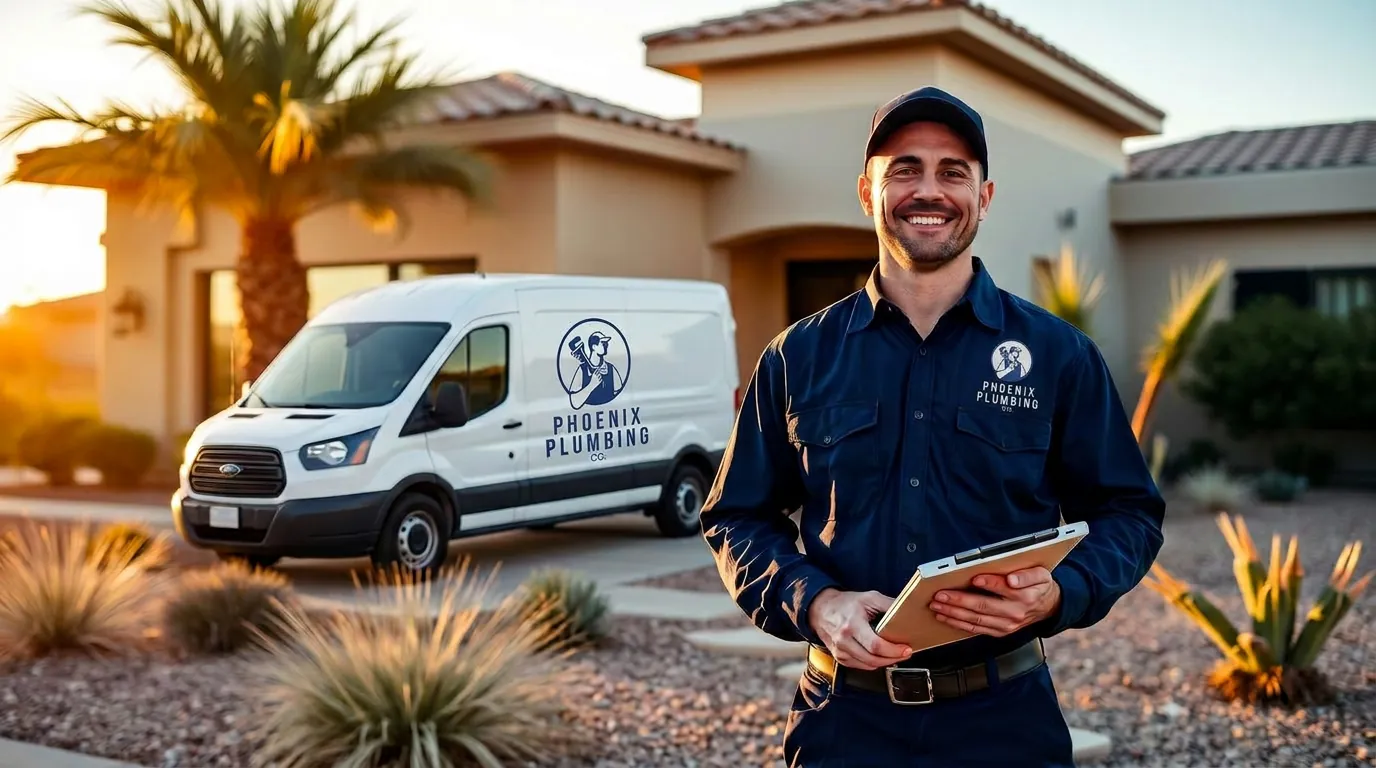
Residential Plumbing Services Phoenix Homeowners Can Count On
Licensed plumbers who treat your home like it's our own. Serving Phoenix families since 2012.
Call Now: 602-834-1208
Your Home Deserves a Plumber Who Actually Cares
Your house is probably your biggest investment. When something goes wrong with the plumbing, you need someone who understands that this isn't just another job—it's your home, your family, and your peace of mind.
Phoenix Plumbing Co. has been helping Phoenix homeowners since 2012. We're the plumbers you call when you want someone who shows up on time, explains what's wrong in plain English, and fixes it right without trying to sell you things you don't need.
We've worked in hundreds of Phoenix homes—from historic neighborhoods near downtown to newer developments in Ahwatukee. We know the plumbing quirks that come with different home types, we understand Phoenix's hard water challenges, and we've seen what happens when Arizona's heat and ground shifting affect your pipes.
Whether your kitchen sink won't drain, your toilet keeps running, or you've noticed a wet spot on the ceiling, we've handled it before and we know exactly how to fix it.
Schedule A Service Call
Contact Us
Common Residential Plumbing Problems We Fix Daily
Leaky Faucets That Won't Stop Dripping
That constant drip-drip-drip from your bathroom faucet isn't just annoying—it's wasting water and money. A faucet that drips once per second wastes over 3,000 gallons a year. That's about $35 on your water bill for literally nothing.
Most faucet leaks come from worn-out washers, O-rings, or valve seats. These are small parts that cost just a few dollars, but they're tricky to replace if you don't know what you're doing. We've seen plenty of DIY attempts that ended up causing more damage because the wrong part got installed or something got cross-threaded during reassembly.
We fix leaky faucets in kitchens, bathrooms, utility rooms, and outdoor hose bibs. Most repairs take under an hour. We bring common replacement parts on our trucks, so we can usually finish the job on the first visit.
Signs you need faucet repair:
- Constant dripping from the spout
- Water leaking around the handle base
- Hard to turn handles or loose controls
- Reduced water pressure from one faucet
- Visible corrosion or mineral buildup
Clogged Drains and Slow-Draining Sinks
Phoenix's hard water makes drain clogs worse. The minerals in our water combine with soap, creating a stubborn residue that builds up inside pipes over time. Add in hair, food particles, and grease, and you've got a recipe for a completely blocked drain.
Kitchen sink clogs usually involve grease, food scraps, and soap buildup. Even if you're careful about what goes down the drain, grease from normal cooking eventually coats the inside of pipes. It starts as a thin film, but over months and years, it gets thick enough to catch other debris.
Bathroom sink and tub clogs are almost always hair combined with soap scum. Long hair is the worst culprit—it catches on any rough spot inside the drain and creates a net that traps everything else. If you've got multiple people with long hair in your house, you're probably dealing with slow drains every few months.
We use professional drain snakes and hydro-jetting to clear clogs completely. The difference between what we do and what a store-bought drain cleaner does is like the difference between power-washing your driveway and spraying it with a garden hose. We actually clean the pipe, not just poke a hole through the clog.
Toilet Problems (Running, Clogging, Leaking)
Toilets are surprisingly complicated for something that looks simple. There are lots of small parts inside the tank that can fail, and when they do, you end up with problems.
Running toilets are the most common issue we see. You flush, and then the toilet keeps running and running. Sometimes it stops after a few minutes, sometimes it never stops. This happens when the flapper (the rubber seal at the bottom of the tank) doesn't seat properly, or when the fill valve doesn't shut off like it should. A running toilet can waste 200 gallons of water per day. That's an extra $100-150 on your annual water bill for one broken toilet.
Frequently clogging toilets usually mean one of three things: someone's flushing things they shouldn't (paper towels, wipes, feminine products), the toilet is an old low-flow model that doesn't have enough flushing power, or there's a partial blockage in the drain line. We figure out which one it is and fix the actual problem, not just the symptom.
Leaking toilets can leak from several places—around the base (which means the wax ring seal has failed), from the tank bolts, from the fill valve connection, or from cracks in the porcelain itself. Leaks around the base are serious because water is seeping into your subfloor every time you flush. If it goes on long enough, you'll have floor damage and possibly mold growth.
We repair toilet issues when it makes sense, and we recommend replacement when the toilet is old or when multiple parts are failing at once. A new toilet costs $300-600 installed, which is sometimes cheaper than repairing an old one that's just going to have another problem in six months.
Water Heater Issues in Phoenix Homes
Phoenix's hard water is brutal on water heaters. The minerals in our water settle to the bottom of the tank and form a layer of sediment. This sediment insulates the water from the heating element, which means your water heater has to work harder and run longer to heat the same amount of water. It also makes noise—that rumbling, popping sound you hear is the sediment being tossed around as the water heats.
Most Phoenix water heaters last 8-12 years instead of the 12-15 years they'd last in areas with softer water. If your water heater is in a garage (which most Phoenix homes have), the extreme summer heat doesn't help either. Water heaters have to work less when they're in a cool spot, and a Phoenix garage in July is the opposite of a cool spot.
Common water heater problems we fix:
- No hot water at all (heating element or thermostat failure)
- Not enough hot water (sediment buildup or undersized unit)
- Water too hot or temperature fluctuates (thermostat issue)
- Strange noises from the tank (sediment buildup)
- Rusty or discolored hot water (corroding anode rod or tank)
- Water pooling around the base (tank leak—needs replacement)
We service both traditional tank water heaters and tankless systems. For tank water heaters, we recommend flushing them annually to remove sediment. It's a $100-150 maintenance service that can add years to the life of your water heater.
Hidden Leaks You Can't See
The worst plumbing problems are the ones you don't know about. A slow leak inside a wall or under the foundation can run for months before you notice anything wrong. By then, you might have thousands of dollars in water damage, mold growth, or foundation issues.
How to spot hidden leaks:
- Your water bill went up but your usage didn't
- You hear water running when nothing's turned on
- There are wet spots on walls, ceilings, or floors
- You smell mildew or see mold in places that shouldn't be wet
- Your water meter is spinning even when all water is off
- Cracks appearing in walls or foundation (sign of slab leak)
Phoenix homes are especially prone to slab leaks—leaks in the water lines that run under your concrete foundation. Arizona's soil expands and contracts as moisture levels change, and this ground movement can stress pipes until they crack. Older homes with copper pipes set in the concrete are most at risk.
We use electronic leak detection equipment, thermal imaging cameras, and pressure testing to find hidden leaks without tearing apart your home. Once we locate the leak, we often recommend re-routing the pipe rather than breaking through the foundation. It sounds counterintuitive, but running a new pipe through walls or the attic is usually faster, cheaper, and more reliable than jackhammering through your slab.
Phoenix-Specific Plumbing Challenges
Hard Water Problems
Phoenix has some of the hardest water in the country. Our water comes from the Colorado River and Salt River, both of which pick up lots of minerals as they flow over rocks and through the desert. By the time it reaches your house, Phoenix water averages 200-300 parts per million (ppm) of dissolved minerals. Anything over 180 ppm is considered "very hard."
What hard water does to your plumbing:
- Mineral buildup inside pipes reduces water flow over time
- White crusty deposits on faucets and showerheads
- Water heaters fail faster due to sediment buildup
- Soap doesn't lather well (needs more soap to get clean)
- Spots on dishes even after dishwasher cycle
- Dry skin and dull hair after showers
A whole-home water softener solves these problems. It removes the minerals before water enters your plumbing system. We install water softeners and filtration systems sized for Phoenix water conditions. Most families see the investment pay for itself within a few years through lower water heater costs, less soap usage, and not having to replace fixtures as often.
Seasonal Plumbing Issues
Summer (May-September): Phoenix summers put stress on your entire plumbing system. Underground pipes can shift as the soil dries out and contracts. Outdoor faucets and sprinkler lines get more use and are more likely to develop leaks. And your water heater might be working overtime if it's in a hot garage.
We see an increase in burst hose bibs (outdoor faucets) during summer because people crank them open and closed repeatedly for gardens and pools. The constant use combined with high water pressure can crack the valve housing.
Winter (November-February): Phoenix winters are mild, but we still get overnight freezes occasionally. Exposed pipes in attics, garages, and outdoor areas can freeze and burst. It doesn't take a hard freeze—just a few hours below 32°F can do it if pipes aren't insulated.
We recommend pipe insulation for any exposed plumbing, especially in older homes where pipes might run through unheated spaces. It's a $200-400 job that can save you from a $2,000+ repair if pipes burst.
Monsoon season (July-September): Heavy rains can overwhelm drainage systems if they're not clear. We see backed-up floor drains in garages and clogged outdoor drains during monsoon season. It's worth getting your drains cleaned before monsoon hits if you've had issues in the past.
Types of Residential Plumbing Services We Provide
Fixture Installation and Replacement
We install and replace every type of residential plumbing fixture:
Kitchen:
- Sinks (undermount, drop-in, farmhouse style)
- Faucets (single-handle, pull-down, touchless)
- Garbage disposals
- Dishwashers
- Refrigerator water lines for ice makers
Bathroom:
- Toilets (standard, comfort height, dual-flush, smart toilets)
- Sinks and vanities
- Bathtubs and showers
- Faucets and showerheads
- Shower valves and controls
Laundry and Utility:
- Washing machine hookups
- Utility sinks
- Water heater installations
- Pressure regulators
- Shut-off valves
-
Installation prices depend on what you're installing and whether we're replacing an existing fixture or adding a new one. Replacing a toilet costs $250-400 including the toilet itself. Installing a new sink in a spot where there wasn't one before costs more because we have to run new supply lines and drains.
We work with fixtures you bought yourself, or we can order them for you through our suppliers. If you're planning a bathroom or kitchen remodel, bring us the specs for what you want installed, and we'll tell you what's involved and what it'll cost.
Pipe Repair and Repiping
Older Phoenix homes often have galvanized steel or cast iron pipes that are reaching the end of their lifespan. Galvanized pipes corrode from the inside out, especially with our hard water. After 50-60 years, they can be so clogged with rust and mineral buildup that water barely flows through them.
Signs your home needs repiping:
- Low water pressure throughout the house
- Discolored water (brown or rust-colored)
- Frequent pipe leaks in different locations
- Visible corrosion on exposed pipes
- Your home was built before 1960 and still has original plumbing
Complete repiping involves replacing all the water supply lines in your home. We typically use PEX (cross-linked polyethylene) for repiping because it's durable, flexible, resistant to mineral buildup, and less expensive than copper. A full repipe for a typical 1,500 sq ft home takes 2-3 days and costs $4,000-8,000 depending on how the house is constructed and how accessible the plumbing is.
We also do partial repiping if only certain sections of your plumbing are problematic. For example, we might repipe just the bathrooms if that's where all the issues are concentrated.
Kitchen and Bathroom Plumbing
Kitchens and bathrooms get the most plumbing use in any home, which means they also have the most plumbing problems.
Kitchen plumbing services:
- Sink and faucet replacement
- Garbage disposal installation or repair
- Dishwasher hookup and repair
- Grease trap cleaning (for homes with commercial-style cooking)
- Water filtration system installation
- Gas line hookup for ranges and cooktops
Bathroom plumbing services:
- Toilet repair and replacement
- Sink, faucet, and vanity installation
- Shower and tub installation or refinishing
- Shower valve repair (fixing temperature and pressure issues)
- Bathroom exhaust fan installation (prevents moisture problems)
- Accessible plumbing for aging-in-place modifications
If you're remodeling a kitchen or bathroom, we handle the plumbing from rough-in through finish work. We coordinate with your general contractor to make sure plumbing gets installed at the right time in the construction sequence. We also help with layout—advising on where sinks and toilets can go based on your existing plumbing and what's allowed by code.
Gas Line Services for Homes
Many Phoenix homes use natural gas for water heaters, furnaces, ranges, and dryers. Working with gas lines requires special licensing because gas leaks are dangerous. All our plumbers are licensed for gas work in Arizona.
Residential gas services we provide:
- New gas line installation for appliances
- Gas line repairs and leak detection
- Converting appliances from electric to gas
- Gas line pressure testing
- Gas shutoff valve installation
- Outdoor gas line for BBQ grills and fire pits
Gas line work costs more than standard plumbing because of the safety requirements and specialized materials. Installing a gas line for a new range costs $300-600 depending on how far the line needs to run. Installing an outdoor gas line for a BBQ island costs $500-1,200.
We always pressure test gas lines after installation to confirm there are no leaks. It's not optional—it's required by code and essential for your safety.
Preventive Maintenance for Your Home
Most homeowners only call a plumber when something breaks. But preventive maintenance catches problems early when they're cheap and easy to fix, instead of waiting until they become expensive emergencies.
Our annual plumbing inspection includes:
- Check all visible pipes for leaks or corrosion
- Test water pressure (high pressure damages fixtures)
- Inspect and adjust toilets (fix running toilets, check for leaks)
- Check under sinks for moisture or slow leaks
- Inspect water heater and flush to remove sediment
- Test all faucets and showerheads
- Check washing machine hoses for cracks or bulges
- Inspect sump pump (if you have one)
- Video camera inspection of main drain (optional add-on)
Annual maintenance costs $150-250 depending on the size of your home. It's the best insurance policy against surprise plumbing failures. We find and fix small problems during inspections that would have turned into $1,000+ emergencies if left alone for another year.
We also offer maintenance plans where you pay monthly and get annual inspections plus discounts on repairs. It's worth it for homeowners who want to budget plumbing costs predictably instead of getting hit with surprise bills.
Residential Plumbing FAQ
Q: How much do residential plumbing repairs typically cost?
A: Common repairs range from $150-500. A faucet repair runs $150-250. Fixing a running toilet costs $150-300. Clearing a drain clog costs $150-350 depending on severity. Water heater repairs cost $250-600. Larger jobs like repiping or water heater replacement cost $2,000-8,000.
Q: Do you offer same-day service for residential plumbing?
A: Yes, we can usually schedule same-day appointments for non-emergency repairs. During our busy season (winter when snowbirds are here), calling early in the day gives you the best chance for same-day service. For emergencies, we respond 24/7.
Q: How long does it take to fix common plumbing problems?
A: Most simple repairs take 1-2 hours. Replacing a faucet: 1 hour. Fixing a toilet: 45 minutes to 1.5 hours. Clearing a drain: 30 minutes to 2 hours. Installing a garbage disposal: 1-2 hours. Larger jobs take longer—repiping takes 2-3 days, water heater replacement takes 2-4 hours.
Q: Should I get a home warranty or just pay for repairs as needed?
A: Home warranties sound good but often have limitations. They might not cover the plumber you want to use, they typically have service call fees, and they might only cover certain types of repairs. For most homeowners, it's better to budget for plumbing repairs as they come up. Annual preventive maintenance (around $200/year) prevents most expensive surprises.
Q: How can I tell if I need to replace my water heater or if it can be repaired?
A: Age is the biggest factor. If your water heater is over 10 years old and having problems, replacement usually makes more sense than repair. If it's leaking from the tank itself (not just a valve or connection), it needs replacement—tank leaks can't be repaired. If you're not getting enough hot water and your family has grown since you installed it, you might need a larger unit. We'll assess the situation and give you honest advice about repair vs. replacement.
Q: What's the difference between PEX and copper for repiping?
A: PEX is flexible plastic pipe that's resistant to corrosion and mineral buildup. It costs less than copper and installs faster. Copper lasts longer (50+ years vs 25-40 for PEX) but costs more and can corrode with hard water. For most Phoenix homes, we recommend PEX for repiping because it handles our hard water better and costs significantly less.
Q: How often should I have my plumbing inspected?
A: Annual inspections are ideal, especially for homes over 20 years old. If your home is newer (less than 10 years) and you haven't had any problems, you can probably stretch it to every 2-3 years. Get an inspection before buying a home and after any major weather event like flooding.
Q: Can you work with fixtures I bought at a home improvement store?
A: Yes, we install fixtures you purchased yourself. Just know that if there's a problem with the fixture itself (defective part, wrong size, etc.), you'll need to handle the return/exchange. When we supply the fixture, we handle all of that. Installation labor costs the same either way.
Q: Do you offer financing for larger plumbing jobs?
A: Yes, we offer financing through approved credit for jobs over $1,000. This helps spread out the cost of big expenses like water heater replacement or repiping. Ask about financing options when we give you the estimate.
Q: What should I do if I have a plumbing emergency?
A: First, shut off the water. For a specific fixture (like an overflowing toilet), use the shutoff valve near that fixture. For bigger problems, use your main water shutoff valve—it's usually near your water meter or where the main line enters your house. Then call us at 602-834-1208. We answer 24/7 for emergencies.
Service Areas
We provide residential plumbing throughout Phoenix and surrounding communities:
- Central Phoenix
- North Phoenix
- South Phoenix
- Ahwatukee
- Arcadia
- Biltmore
- Camelback East
- Desert Ridge
- Encanto
- Laveen
- Paradise Valley
- Sunnyslope
We also serve nearby cities including Scottsdale, Tempe, Mesa, Chandler, Gilbert, Glendale, and Peoria. If you're in the Phoenix metro area, we can help.
Schedule Your Residential Plumbing Service Today
Whether you're dealing with a minor annoyance like a dripping faucet or a serious problem like a hidden leak, we're here to help. We serve Phoenix homeowners with honest, professional plumbing services at fair prices.
Call 602-834-1208 or schedule online to get started.
Our regular hours are Monday-Friday 6:00 AM to 5:00 PM and Saturday 6:00 AM to 2:00 PM. Emergency service is available 24/7, including Sundays.
Phoenix Plumbing Co. has been serving Phoenix families since 2012. Licensed, insured, and ready to solve your residential plumbing problems.


