
Make Us Your Preferred Source
Add Phoenix Plumbing Co. as a preferred source on Google so our local plumbing advice shows up first in your results.
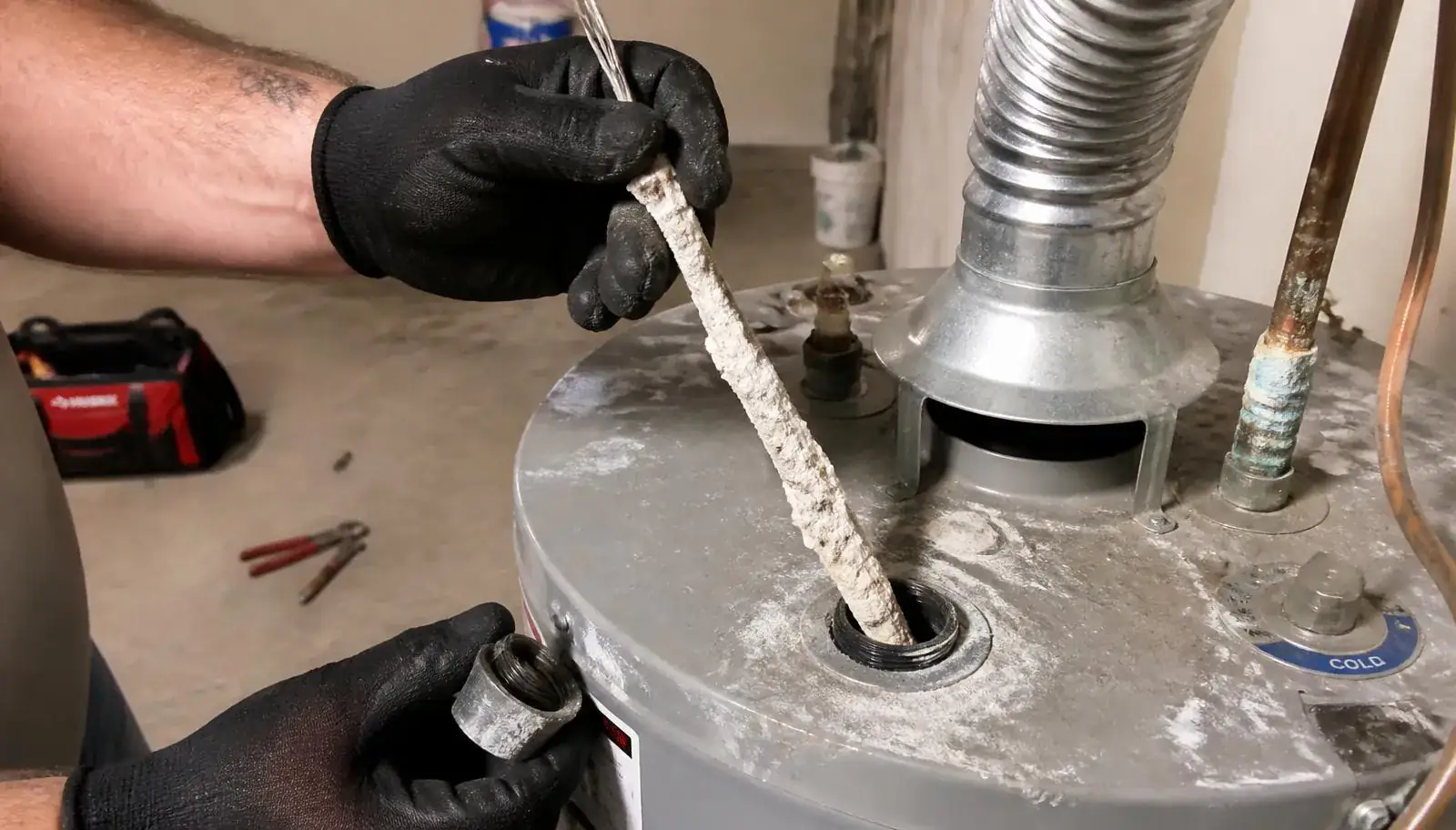
Why does my hot water smell like rotten eggs? Nine times out of ten, it's hydrogen sulfide gas coming from your water heater — harmless sulfur bacteria in the tank react with the magnesium anode rod, and that reaction gives your hot taps that rotten egg stink.
I own Phoenix Plumbing Co., and my family has worked on Valley plumbing for three generations. This call comes in every single week, usually from somebody a little embarrassed to describe the smell. Don't be. It's common, it's fixable, and most of the time it does not mean you need a new water heater.
Why Does My Hot Water Smell Like Rotten Eggs? The Simple Science
Inside every tank water heater is a long metal rod called an anode rod. Its whole job is to sacrifice itself — it corrodes first so the steel tank doesn't. Most heaters ship with a magnesium rod. Certain harmless bacteria that live in almost everybody's water love a warm tank, and when they meet a magnesium rod, they produce hydrogen sulfide gas. That gas dissolves into your hot water, and when you open a tap, out comes the smell.
Here's the tell: the smell shows up in hot water only. If your cold water smells too, the problem is your water supply or your drains, not your heater. More on that in a minute.
Phoenix Water Makes This Worse
Our water runs 16 to 20 grains per gallon of hardness — some of the hardest city water in the country. All that mineral settles out as scale and sediment on the bottom of your tank, and that warm blanket of sediment is a perfect home for the bacteria behind the smell. On top of that, most Phoenix water heaters live in the garage, where summer temps push past 110 degrees. A warm tank in a hot garage is basically a bacteria greenhouse.
One more local twist: softened water actually eats magnesium anode rods faster. I've pulled rods that were down to a bare wire in four years. If you want the bigger picture on what our water does to your plumbing, read what Phoenix hard water is doing to your pipes.
How We Fix It (Usually Without Replacing the Heater)
On most heaters this is a same-day visit. Here's the playbook:
- Flush the tank to wash out the sediment where the bacteria live.
- Sanitize the tank with a chlorination flush to knock out the colony.
- Swap the magnesium anode rod for an aluminum-zinc rod, which doesn't feed the reaction. For stubborn repeat cases, a powered anode rod usually ends the smell for good.
- Check the temperature setting and the condition of the tank while we're in there.
Our trucks carry the common rods, so about 90% of these get finished on the first visit, and you see the flat price before we lift a wrench. If the tank turns out to be rusting or leaking, we'll tell you straight — you can see how we handle that on our water heater repair and installation page. And if sediment keeps building back up fast, a water softener or filtration system can slow the whole cycle down.
A Real One From Ahwatukee
Last spring a couple in Ahwatukee called in a mild panic. Their hall bathroom smelled like rotten eggs every morning, and the in-laws were flying in Friday. Another outfit had already quoted them about $2,400 for a new heater. Their heater was eight years old, out in the garage. I pulled the anode rod and it was chewed down to the steel core, with a couple inches of sediment on the tank bottom. We flushed it, chlorinated it, and set an aluminum-zinc rod. The bill was a few hundred bucks, the smell was gone before the in-laws landed, and that heater is still running today. That's why we always pull the rod before we quote anything.
The Honest Part: Sometimes It's Not Your Heater
I'd rather lose a sale than fix the wrong thing, so here's the other side:
- If your cold water smells too, it's the supply, not the heater. That points to the water source itself, and a whole-home filter is the fix — not an anode rod.
- If it's only one sink, sniff the drain. Hair and gunk in a P-trap make the same sulfur smell, and folks blame the heater. That's a quick drain cleaning, not a water heater job.
- An older heater that heats fine and doesn't leak usually just needs the rod swap. Don't let anyone sell you a whole new heater over a smell without pulling the rod first.
Not sure which bucket you're in? Our $129 40-point plumbing inspection checks the anode rod, the sediment level, and every fixture in the house, so you get an answer instead of a guess.
Get Rid of the Rotten Egg Smell — Call 602-834-1208
If you're still wondering why your hot water smells like rotten eggs, don't live with it — it's one of the cheapest plumbing problems to fix when you catch it early. Call Phoenix Plumbing Co. at 602-834-1208. A live Phoenix dispatcher answers the phone, you get a flat price before any work starts, and every job carries our written workmanship warranty.
Frequently Asked Questions
Related services
- Water Heater Repair & Installation in Phoenix, AZ
- Water Filtration & Softener Systems in Phoenix, AZ
- Plumbing Inspections & Maintenance in Phoenix, AZ
Keep reading
Have a plumbing question this article didn't answer? Call Phoenix Plumbing Co. — a live Phoenix dispatcher picks up, and we'll give you straight advice on the phone.